Whatever You Need

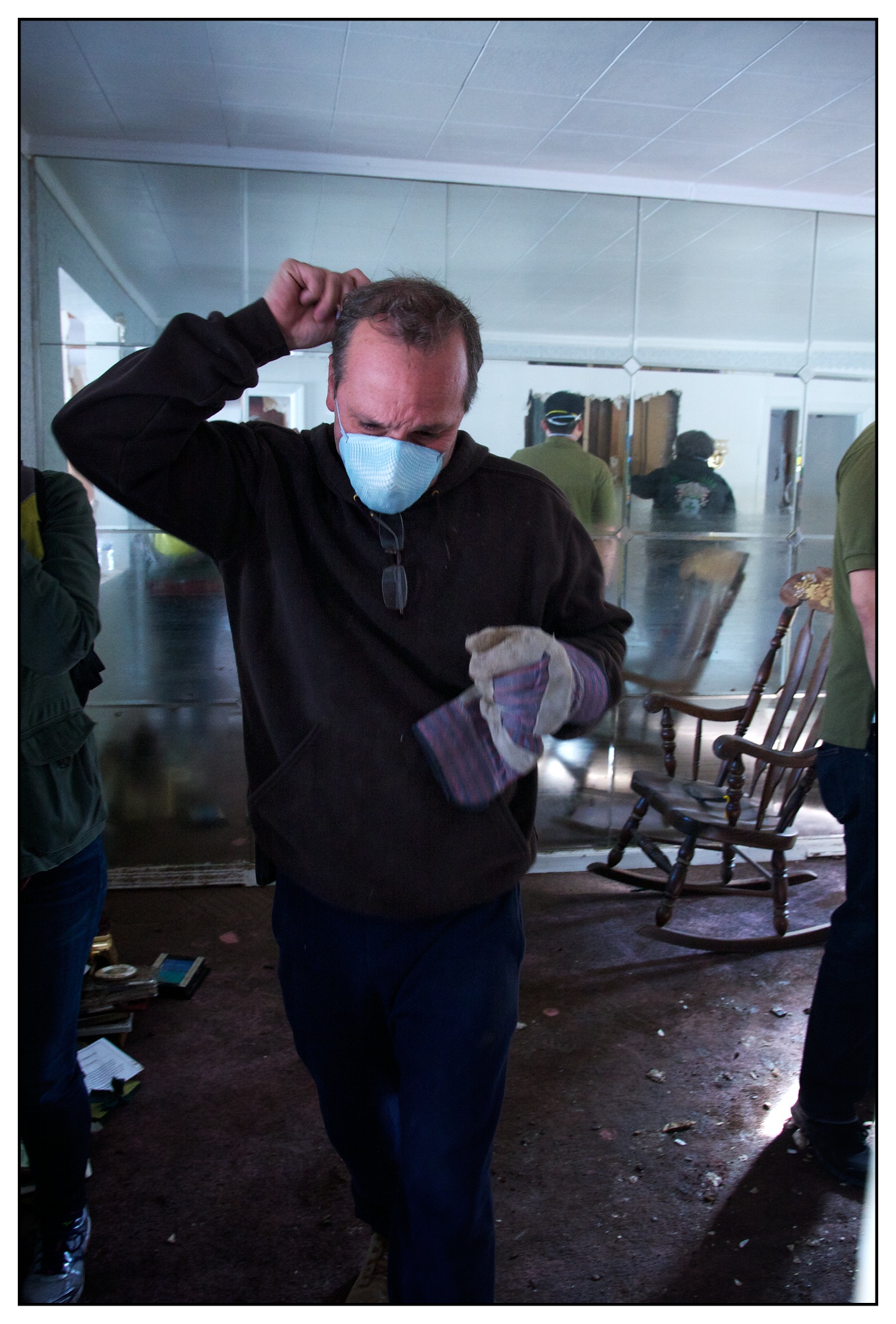
We met Michael by following a volunteer demolition crew to his mother’s home. His family lost four houses in the storm. Around Staten Island, we learned, most family members live within blocks of each other, so when one home is affected by something like this, odds are your whole support network is.

“You sure you want to drive all the way out there with us?” The demolition crew asked. “It’s far. Like, a six, maybe seven minute drive, easily.”

Michael’s story: here.

Continue Reading

Different World

We met JD in his driveway, washing his parents’ car — he pointed toward his own car on the street, which was caked in mud. “Yeah, a lot of the cars are getting washed today,” he said.

His home is still without power, almost three weeks after the storm. There was a “restricted use” sign on their door, but his family is living there: he and his siblings and his parents and his grandparents all sleeping in one room upstairs. I asked him if this didn’t feel incredibly crowded and claustrophobic. “It’s okay,” he said, “because it gets cold. We all snuggle up.”

JD’s story: here.

Continue Reading

Not Just One House

Meg and I saw Linda and her husband working in their yard from the street, and hesitantly stepped onto the flattened chain link fence to ask if they’d be interested in talking to us about how the storm affected them. “Sure,” they said. “But here, come in through the gate.” The gate to their yard was the only part of the fence left standing; they’d secured it against a garbage bin.

She invited us inside, where a orange flames crackled in the fireplace, and her two dogs happily and persistently licked at our jeans. “All of my Christmas decorations,” she said. “I thought they were in the attic, but they were in the storage unit outside. I have seven kids and I got each of them an ornament when they were born. Just, swept away.”

Linda’s story: here.

Continue Reading

That’s a Miracle

I found out about Cowbird and their partnership with Sandy StoryLine through a public radio listserv I’m on; they sent out a message a couple weeks ago looking for volunteers to help people tell their Hurricane Sandy stories. I went to the instructional workshop on a blustery, lonely Friday in an unheated chapel, and when I stood waiting for my train back home a girl waved at me. I recognized her from her red wool coat, which I’d admired standing out amongst the dark pews.

“Hey! Weren’t you just in that . . .”

“Yes! Hi! Hi.”

We talked until my stop and decided to keep in touch; two days later we drove to Staten Island together to talk to the volunteer organizers and knock on strangers’ doors.

We met Joseph later on in our day. He was raking his yard when we approached. “You want my story? Sure, sure, I’ll show you what happened.” He drew a line with his finger against the brick to show how high the water had gone. “You see that storage unit at the end of the street?” he asked. “That holds a lot of sports gear. Used to be right off the baseball field, six blocks away.”

Everyone’s homes are being torn up — their carpets were soaked with water and mud, their hardwood floors warped and destroyed. Sheetrock walls are being cut and removed to prevent mold. Everyone we talked to spoke of all the pictures they’d lost. Everyone we talked to sighed and shrugged it off. “But you gotta rebuild, right? You just gotta rebuild.”

Joseph’s story: here.

Continue Reading

The Hospital, 2pm

The first time we broke into the building together it was broad daylight and I was carefree. We all met in the parking lot of a pizza place to casually leave in groups of four. “Look cool, but don’t look like you’re trying to look cool,” Andrea stressed. “Talk to each other, but don’t be loud. We were thinking, maybe it’d be good if people smoked cigarettes.”

“Pffft,” I said.

Nick had thrown a rope over a wall earlier that day and repelled into the courtyard. He was inside now, waiting for us.

“Are you nervous about getting arrested?” someone asked.

“Are you kidding me? I would love to get arrested today,” I cried. “That shows cops are actually around. Which implies a certain degree of security and safety . . . sanity, order . . . that let’s just say, I’d love to feel around here. Anyway, I decided long ago that I don’t care about my legal record. I will never have that kind of job.”

Seriously though. I write about my life (mistakes) on the internet. I take my clothes off in bars and hotel conference rooms. Getting arrested for breaking and entering an abandoned mental hospital would be just another awesome thing you wish you were telling your grandchildren.

“. . . Unless there’s a fee involved. Nights in jail I can do. But really, I can’t afford even a twenty-five dollar ticket.”

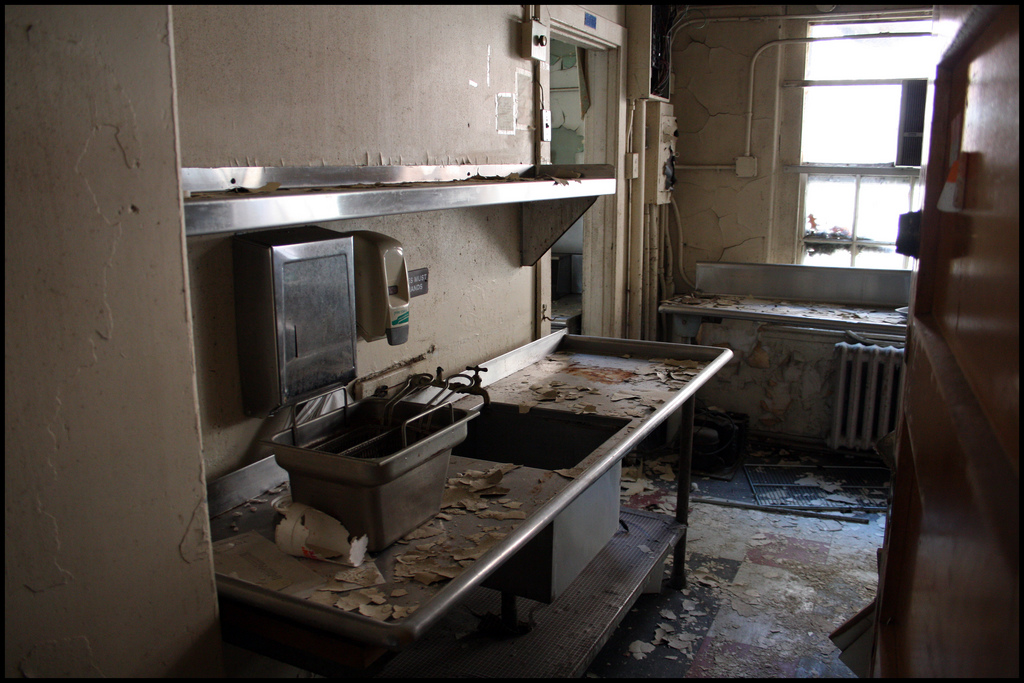
We slipped in the side door, confident, chatty but muted, smoking cigarettes, and waited for the next group of four. The walls fluttered with peeling paint. Afternoon sunlight broke in through crumbling windows and everything was glowing, shifting, crunching under our feet. This was the kitchen. Here is the old sink. This was the sponge they used. Crunch, crunch, crunch.

“Uh, guys . . .”

Scott nodded his head toward the door, which was now wide open. A uniformed man had propped it with his foot. His left hand was shading his face from the sun, his right hand was on his hip. He was just standing there, like a man who has stood there many times before, waiting to be noticed.

We filed out, one at a time. Hop over broken glass, jump down to pavement, scamper scamper. Then he closed the door behind us, and wordlessly returned to his squad car.

Continue Reading