The next day all I remembered was thinking I’ll never find them here!
I awoke assuming it was probably just a remnant from some dream, and stumbled blearily to the jewelry box. Empty. I wandered around the apartment like a headless ghost searching for its heart.
“I can’t find all of my rings!” I mourned to Janaka. “I may have . . . hidden them from myself.”
“Did you try the bathroom shelves? The living room table? Did you look under the couches?” He looked askance at a slumbering Michael Dracula. “Maybe the kitties got to them.”
Everywhere. The pockets of all the clothing I’d brought. Purses, drawers, ziplock bags for make-up and shampoo. I crawled on the floors and slid my hands into cushions of dust beneath side tables. In the days that followed, I looked underneath every object I picked up, examined every possession as if it were something new: a clue, a code, a breadcrumb to another breadcrumb, a trail. I thought, “if I just see the right thing in the right light, I’ll know.”
Forks jumbled sideways and upside down in the silverware organizer. That painting, slightly askew on the wall. The uplifted corner of the rug. Don’t change anything! I’m trying to remember something.
The clarity of the few seconds preceding my ring set-down have been relived to the point of fiction. Okay, I think. I am pulling each one off my fingers — each ring associated with a different place, a different person, a different memory, each ring a thing I would twist around its finger during times of duress, boredom, the replacement for my “uh”s in speech. This is for high school and the slow, enchanted retail job with the snowy windows. This is for Portland, a mailed birthday present opened in an attic room. This is the stone that symbolically cracked in half. Yes. I am in my pajama pants, wool socks, a long sweatshirt. I take each ring off its finger. I stand there, clinking the rings around in one hand like fated dice, looking deviously around — what room, what room was I in? I’ll never find them here!
“Were . . . you sleepwalking?” Janaka asked. “In your memory, is it dark in the house?”
I closed my eyes and tried to think. “I don’t know,” I said.
It’s been two weeks. Where the rings once were I still twist, shift, clack. I barely even notice their absence any more; this is the new habit, a lot like the old habit. Most days now I forget to look, forget to examine everything, forget that something once so integral to my history is missing. My hands are empty totem poles. The jewelry box contains two barrettes.
The dressing room we’d been shown to for the Christmas show was a combination of all the worst attributes of the most dismal dressing rooms I’d ever seen. It may not even be fair to include it such a roundup since it was, technically, not a room at all but a hallway: part of an emergency exit in the basement between a dance club and the elevator up to our bar. A single florescent strip was stuck to the ceiling some thirty feet up, flickering off a filthy grey cement floor and tall cinderblock walls, and this distant shimmering gave the walls an illusion of movement, as if you were being shut in, buried alive.
It was cold, there were no tables or mirrors or rods upon which to hang clothing: just the sticky floor, with its dustbunnies and ambiguous grime. Every now and then the door to the gay bar would suddenly open, bringing thunderous bass and orange/blue disco lights and Gaga and some inquisitive face peering through — we would all yelp as it shouted “so what’s this door lead to anyway?”
For my act, I would be performing to “Blue Christmas,” as sung by the troupe leader. I would play it as a weeping protester to Minnesota governor candidate Tom Emmer’s concession, dragging along a bottle of wine and my gigantic protest sign that read “RE-RECOUNT” on both sides. I sobbed through the audience and clambered gracelessly onto the carpeted stage, mascara running all over my face, crystal tears adhered to my cheeks; I made out with his framed image. O Emmer! Who will save marriage now?
The eye make-up was my favorite part. I was the first act after intermission, so I’d rush down the elevator about three acts before and peer on my knees into the mirror someone had leaned underneath the florescent strip, painting long dripping lines onto my face with black liquid eyeliner and carefully plucking each crystal from its adhesive sheet with laced fingers. I wore two sets of false eyelashes, glittering white and blue shadow, and a few minutes before I was slated to head back upstairs I’d slip off my boots and put on the heels — that’s a lesson I learned a while ago. Save foot discomfort for last (no matter how cute they are).
The first night the act went over well, and I squirmed my way back through the audience and whooosh, down the elevator. The doors opened to a man in a big red suit pulling curlers out of someone’s hair.
“You still going to be one of my girls?” Santa asked.
“Oh! Oh right, yes. Let me just throw some clothes on. How much time do we have?”
“Five minutes, max. We’re the next act.”
“Yikes, okay! I’m on it.”
I pulled off fishnets and lace gloves, slipped on opaque tights, found my slip, a gold shimmering skirt, a black dress shirt. One minute! Thank you one!
“Hey, is it all right if my eyes are still weepy for your piece?” I called down the dark hallway. “Or . . . does all of this need to come off?”
“What? What?” Santa came bumbling toward me. “Oh, that. No that needs to come off. Hurry up now we’re almost on.”
I looked around in panic. “I have cold cream but nothing to wipe it off with. Do you have a tissue?”
“What? No, no. Just use panties or something.”
I was slathering the cold cream all over, and my cheeks had become a grey blue paste. “I didn’t bring any spares. You don’t have a towel or anything? A t-shirt?”
“No, no. Here,” he grabbed a white satin glove out of someone’s trunk. “Just use this.”
I stared at him in disbelief through goopy eyes. “John. How many enemies do you want me to make tonight?”
“C’mon it’ll be fine! We have to go!”
“I’m not ruining someone’s glove.”
He turned down the hallway and shouted “ten seconds, ladies! Let’s go!” Then he reached down and pulled off his sock, handing it to me. “Here.”
There were two seconds of hesitation. I’d taken the worn sock from him, was holding it in my hand. I stared at myself in the mirror: nightmarishly frosted in grey and blue, shimmering and undead in that buzz of florescent light. We have to go, we’re on in 10. I rubbed his sock all over my face, dug it into my eyes, slathered on more cold cream and smeared it off over and over until all the evidence was gone and I was back: a nice looking girl.
I was twenty years old when our flight from Venice landed in New York, and like any self-respecting magical moment, it was late, late at night. Snowing, too, but it had snowed the entire time we were in Venice, and we were beginning to suspect that this is just what life looked like, now.
Shining black passageways, white in the air. I’d followed strange handsome men back to their apartments and spoken (sympathetically and with surprising vocabulary range, I congratulated myself) of aqua alta. I’d sliced my finger open while rinsing an empty tin can of tomatoes; it was still drunkenly bandaged with rolls of translucent toilet paper, bits of white that would heal into my hand. I’d fallen in love during that trip with my roommate, because like any self-respecting female friendship I had found her horrifically annoying until that moment we were left alone together and asked to survive. We invented code words, communicated in glances, wore each other’s clothes, I told her almost everything.
But now, suddenly: it was over. New York surrounded us like a shifting black bear. “Bard?” A man called. “Bard College?” And he took our luggage and opened the door and everything was warm and safe and planned for us, like it was in those days. I grabbed the front seat.
Of course we’d all noticed there was something a little off about the driver immediately, but no one was concerned. He wasn’t scary off, he was just . . . quiet. Intense, wild eyes. A thick accent I couldn’t identify. He sailed us onto the highway, and as the city began disappearing behind us, he reached forward and abruptly punched the play button on his tape deck.
“Oh!” I turned to him, clasping my hands in delight. “I love this song so much!”
Our driver slowly turned and looked at me with inexplicable rage. He said nothing. Then he creaked his head back onto the road, which was twisting eternally into the darkness.
I was in pretty high spirits with all this snow fluttering around the car, so I shrugged it off and snuggled happily against the window, sighing with romance and tragedy and foreign languages. And actually, as the song ended, with just a few seconds of silence before the violins restarted their sweet song, I again turned to him, seemingly undeterred. “Oh!” I cried. “We get to hear it again!”
No one else in the shuttle had uttered a word. The driver didn’t even look at me this time, but grit his teeth and stared stonily ahead. The social understanding part of my brain was reluctantly kicking its rusty parts back into gear. Not . . . new . . . friend . . . be quiet. I shut my mouth for the rest of the ride.
Four hours long, that drive back to college: with this song repeating, over and over. Our driver had apparently made a tape of nothing but Offenbach’s Barcarolle on both sides. One side had allowed the song to end completely, so that there was about half a minute of silence before the deck whirred and clicked, began again. The other had the song end a few seconds short, before the clickity clickity, clunk.
Needless to say, I. Loved. It.
Each time as the song ended, I held my breath. Would he tire of it? Would this be the ending that ended everything, not that he would murder us all (although frankly that thought wasn’t entirely out of everyone’s minds) but my reverie, this perfect moment trapped on repeat for as long as he allowed it? If he hit stop, I decided, the snow would stop falling. If he hit stop, Daria would wake up in Jared’s lap and he would stop caressing her hair. If he hit stop, no one would look out the windows any more and someone would clear their throat. If he hit stop we would all just wish we were home.
But he didn’t, and so it all continued: the swirls of snowflakes against the darkness, the black fur of the grumbling New York bear shifting beneath us. Jared caressed his girlfriend’s hair while she slept in his lap, safe. In the seat behind them, Kelly pretended not to watch, envious. Jesse’s neon sneakers sprawled beneath the seats of Matt, Tanya and Theresa. My roommate dozed against an icy window pane, unaware that the prettiest freshman anyone had ever seen, next to her, was cuddling a boy whom I had viciously lied about to another. (“I didn’t want to kiss him!” I had claimed desperately to the new interest, two years ago. “He got me high, and then made me! I tried to get away!” As soon as the words left my mouth I regretted them, felt a new history develop that I was powerless to correct. And, terrified, I would never confess to him or apologize, so when he made fun of my roommate two years later there in Venice, the comebacks would stop in my throat.) The prettiest freshman cooed her pretty coffee tinted lips against his neck, and if it were today, I would have easily been happy to see someone I’d done wrong happy again. But back then all pretty girls were trespassers; and there was a limited amount of happiness in this world, and anyone else’s was less for me.
Still, that song was playing, and in that moment my youth was blissfully transcended. My mistakes, my wretched manipulations, the hierarchies we’d constructed, the love we had and the love we tried to get, transcended — they were all just fleeting, details of a bigger thing. The black highway was infinite, the endless snowflakes melting upon impact, the driver staring straight ahead, and the opera played on, and on, and on.
On his new Tumblr curatorial blog Book Face, our friend Brendan posits that a book is the sexiest accessory. I think sexy things happen in closets. (That’s The Spell of the Sorcerer’s Skull by John Bellairs, if you’re wondering.)
For the first time in my life the plane ride was serene, which is kind of strange because we were flying in a rainstorm and couldn’t seem to land. It was around midnight and the sky was all black and wet, scattered with clouds like plumes of train smoke. No one but the pilot had spoken in hours. Put your tray tables up, he’d said (I thought briefly “what if I became one the few female captains”), and so we did. I had just finished my sad book, stared despondently at the cover for a while, wondered if I was capable of that much evil. I curled up into my seat like a little kid, watching the tributaries of rainwater split across the window, examining each peanut M&M before popping it into my mouth like they were something foreign — which they really kind of are (the majority of my life has been spent hating peanut M&Ms, until that one time I got stoned in the summertime and we rode through New Hampshire with the windows down and sang along to all of the songs). You are a brightly colored asteroid, I thought. You are an undiscovered mineral, you are the exoskeleton, you are the fossil left by the exoskeleton.
We had been circling over Boston for a half an hour: the plane dipping up and down, turning on its side to give us windowfuls of stars. The slender man behind me was pressing his gleaming head against the glass, a fringe of white hair glowing in the reading light. I pressed my head against my window too, and we were just inches apart like this, oh here’s the sky, oh there’s the ocean, we’re coming in for a landing, no, wooosh, back up we go. The stars blinked knowingly. I thought, if I just opened this window I could crawl out, and float down to you.

 The next day all I remembered was thinking I’ll never find them here!
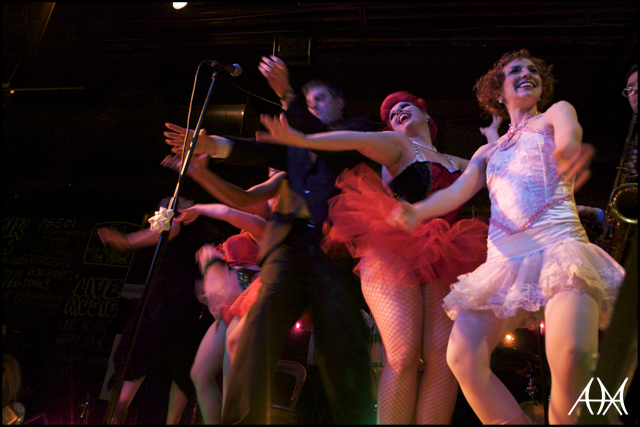 The dressing room we’d been shown to for the Christmas show was a combination of all the worst attributes of the most dismal dressing rooms I’d ever seen. It may not even be fair to include it such a roundup since it was, technically, not a room at all but a hallway: part of an emergency exit in the basement between a dance club and the elevator up to our bar. A single florescent strip was stuck to the ceiling some thirty feet up, flickering off a filthy grey cement floor and tall cinderblock walls, and this distant shimmering gave the walls an illusion of movement, as if you were being shut in, buried alive.
 I was twenty years old when our flight from Venice landed in New York, and like any self-respecting magical moment, it was late, late at night. Snowing, too, but it had snowed the entire time we were in Venice, and we were beginning to suspect that this is just what life looked like, now.
  On his new Tumblr curatorial blogÂ
On his new Tumblr curatorial blog  For the first time in my life the plane ride was serene, which is kind of strange because we were flying in a rainstorm and couldn’t seem to land. It was around midnight and the sky was all black and wet, scattered with clouds like plumes of train smoke. No one but the pilot had spoken in hours. Put your tray tables up, he’d said (I thought briefly “what if I became one the few female captains”), and so we did. I had just finished my sad book, stared despondently at the cover for a while, wondered if I was capable of that much evil. I curled up into my seat like a little kid, watching the tributaries of rainwater split across the window, examining each peanut M&M before popping it into my mouth like they were something foreign — which they really kind of are (the majority of my life has been spent hating peanut M&Ms, until that one time I got stoned in the summertime and we rode through New Hampshire with the windows down and sang along to all of the songs). You are a brightly colored asteroid, I thought. You are an undiscovered mineral, you are the exoskeleton, you are the fossil left by the exoskeleton.